
How to Set Your Daily Alkaline Water Intake
Last Updated: November 14, 2026
Quick Summary
For most healthy adults, a moderate alkaline water intake is roughly one to three glasses, or about 8 to 24 ounces per day, alongside your normal water intake. Start with one 8-ounce glass with a meal and build up slowly. Keep alkaline water at or below about half your total fluids, with the rest as plain water.
- No health agency sets an official recommended daily dose for alkaline water.
- Alkaline water is not a separate hydration target; it swaps in for some of your usual water.
- Add 1 to 2 cups of fluid per hour of hard exercise when estimating total daily fluids.
- Drink alkaline water with meals or mid-afternoon rather than on an empty stomach first thing.
- Anyone with kidney disease or on a sodium-restricted diet should ask their doctor first.
Table of Contents
- There Is No Official Daily Alkaline Water Dose
- Why Alkaline Water Is Not a Separate Hydration Target
- How Much Alkaline Water Is Safe Per Day
- How to Build a Personalized Alkaline Water Intake
- The Best Time to Drink Alkaline Water
- Alkaline Water Side Effects to Watch For
- Is Alkaline Water Good for Kidneys?
- How to Make Alkaline Water Naturally at Home
- Build Your Daily Ritual With AUR'A Gold Water
- Frequently Asked Questions
There Is No Official Daily Alkaline Water Dose
There is no official daily alkaline water dose.
Alkaline water is drinking water with a higher pH than usual, typically somewhere between 7.5 and 9. It is not a medicine and it is not a nutrient requirement.
Here is the uncomfortable truth most guides skip: your body regulates its own pH within a very tight range, and no glass of water changes that.
Below, we break down safe ranges, timing, and how to build a personal number.
Why Alkaline Water Is Not a Separate Hydration Target
Your body does not track alkaline water as its own category.
So you do not add alkaline water on top of your normal water needs.
A common mistake is treating alkaline water like a supplement with its own dose. It is not.
The CDC guidance on water and hydration frames daily fluid needs around total intake, not around any single type of water.
How Much Alkaline Water Is Safe Per Day
For most healthy adults, a moderate daily amount of alkaline water is roughly one to three glasses, or about 8 to 24 ounces, alongside your normal water intake.
- Start with one glass a day. Try 8 ounces with a meal for a week.
- Build to two or three glasses. Spread them across the day, not all at once.
- Cap alkaline water at about half your total fluids. Keep the rest as plain water.
Check with a doctor before pushing past that range. There is no established benefit to drinking only alkaline water.
If you want to see exactly what you would be drinking daily, AUR'A publishes its full mineral breakdown and lab reports on its mineral composition and certificates page.
How to Build a Personalized Alkaline Water Intake

Most guides give you a glasses-per-day number and stop. That number is almost always a guess. A personalized alkaline water intake starts with your total fluid needs, then carves out a sensible share for alkaline water.
The first distinction to get right: total daily fluids and alkaline water are not the same target.
Step 1: Estimate Your Total Daily Fluids
Start with the population baseline, then adjust. Treat the baseline as a starting point, not a prescription.
| Adjustment | Direction | Rough Change |
|---|---|---|
| Body size | Larger bodies generally need more | Scale up modestly |
| Hard exercise | Sweat losses add up | Add 1-2 cups per hour of hard exercise |
| Hot, humid, or high-altitude climate | Higher needs | Add 1-2 cups |
| Water-rich diet | Fruit, soup, and vegetables count | Subtract 1-2 cups |
That range is wide on purpose; your own number depends on how you feel and how often you urinate.
Step 2: Set the Alkaline Share
Once you have a rough total, decide how much of it should be alkaline water. For most healthy adults, one to three 8-ounce glasses, or about 8 to 24 ounces, is a common share to try.
Watch out: setting your alkaline number first and your total second is the most common mistake. Do it in the order above and the math stays honest.
Step 3: Adjust for What You Actually Drink
Your diet changes the math more than people expect. Coffee, tea, milk, soup, fruit, and vegetables all count toward total fluids, so if you already drink several cups of coffee a day, your plain-water gap is smaller than you think.
A simple way to check yourself: aim for pale yellow urine and steady energy through the day. Those are practical hydration signals, not lab tests, but more useful than a rigid number.
Step 4: Decide Whether Alkaline Water Belongs at All
There is no established health requirement for alkaline water. If you like the taste and it helps you drink more total fluids, it can be a swap. If you drink it believing it will change your body's pH, the evidence does not support that.
If you want to see exactly what you would be drinking daily, AUR'A publishes its full mineral breakdown and lab reports on its mineral composition and certificates page.
The Best Time to Drink Alkaline Water
The best time to drink alkaline water is with meals or between them, not on an empty stomach first thing if you are prone to indigestion.
- With meals. A glass alongside lunch or dinner is easy to remember and gentle on the stomach.
- Mid-afternoon. A good replacement for a second coffee.
- After light activity. Fine for topping up, but pair it with plain water after hard exercise.
One insider note: a large glass right before a meal can blunt your appetite and crowd out food.
Skip chugging alkaline water first thing in the morning on an empty stomach. Some people find it triggers mild reflux, and there is no benefit to the timing.
Alkaline Water Side Effects to Watch For
Most people tolerate alkaline water well. The side effects that do show up are usually mild and tied to drinking too much too fast, but the safety picture depends on how the water is made, what else you take, and whether you have a condition affecting fluid or mineral balance.
Common, Mild Effects
- Stomach upset or nausea. Usually from drinking it on an empty stomach or in large volumes.
- Bloating. Common with sparkling alkaline water, especially at meals.
- Reduced stomach acidity. Your stomach is meant to be acidic for digestion. Large amounts of alkaline water may buffer that, at least briefly.
If you are worried about sparkling water specifically, our honest breakdown of whether bubbly water is bad for you covers what the evidence actually says.
Medication and Medical-Condition Precautions
This is where most guides stay vague. A few practical points matter more than the symptom list.
- Stomach-acid-dependent medicines. Some medicines are designed to dissolve in an acidic stomach. Large volumes of alkaline water could, in theory, affect how quickly some of them break down. If you take a medicine that depends on stomach acid, ask your pharmacist whether timing matters.
- Kidney disease and dialysis. Your kidneys regulate acid-base balance and handle mineral loads. If they are damaged, the extra bicarbonate and minerals in alkaline water are not a trivial addition. Talk to your care team before making it a daily habit.
- Sodium-restricted diets. Some alkaline waters, especially sparkling varieties, carry sodium. Check the label if you are watching sodium.
Watch out: anyone with kidney disease or on a sodium-restricted diet should talk to their doctor before making alkaline water a daily habit. The mineral content is the reason.
How the Source Changes the Risk
Not all alkaline water is the same, and the differences affect what you are actually drinking.
- Bottled natural mineral water. Gets its pH and mineral profile from the source; the label should list the source and mineral analysis. AUR'A, for example, is bottled at the source in Romania's Banat Mountains at a naturally alkaline pH of about 8.25, with trace gold and silver confirmed by lab analysis.
- Filtered alkaline water. Often made by passing tap water through a mineral cartridge; the pH can drift and mineral content depends on the cartridge.
- Home-ionized water. A water ionizer splits water into alkaline and acidic streams; output depends on input water and device settings, and the machines need maintenance.
A common assumption is that homemade or filtered alkaline water matches a bottled mineral water. It may not.
When to Stop or Scale Back
Stop or scale back if you notice persistent stomach upset, bloating that interferes with meals, or any new symptom that appears after you start. If you have a medical condition or take prescription medicine, check with your clinician before starting, not after.
If you want the deeper evidence picture before committing to a daily habit, our guide on whether alkaline water health benefits are real walks through the research.
Is Alkaline Water Good for Kidneys?
Alkaline water is not a kidney treatment, and no one should drink it to manage kidney disease.
Your kidneys do the heavy lifting on acid-base balance. They filter blood, excrete excess acid, and reabsorb bicarbonate as needed.
If you have kidney disease, are on dialysis, or take diuretics, ask your doctor before adding alkaline water to your routine. That is not a hedge.
How to Make Alkaline Water Naturally at Home
You can raise the pH of water at home without a machine. The simplest methods add minerals that shift the pH up, and they cost very little.
- Add a pinch of baking soda. A small amount, roughly one-eighth of a teaspoon per glass, can raise pH. Go easy; too much tastes soapy.
- Use mineral drops. Calcium and magnesium drops raise pH and add minerals at the same time.
- Try a water ionizer. These devices split water into alkaline and acidic streams. They cost more and need maintenance.
A common mistake is assuming homemade alkaline water matches a bottled mineral water. It does not.
If you want the deeper evidence picture before committing to a daily habit, our guide on whether alkaline water health benefits are real walks through the research.
Build Your Daily Ritual With AUR'A Gold Water
The most sustainable alkaline water intake is the one you actually keep up with, a bottle you look forward to opening, not a chore you track on a spreadsheet.
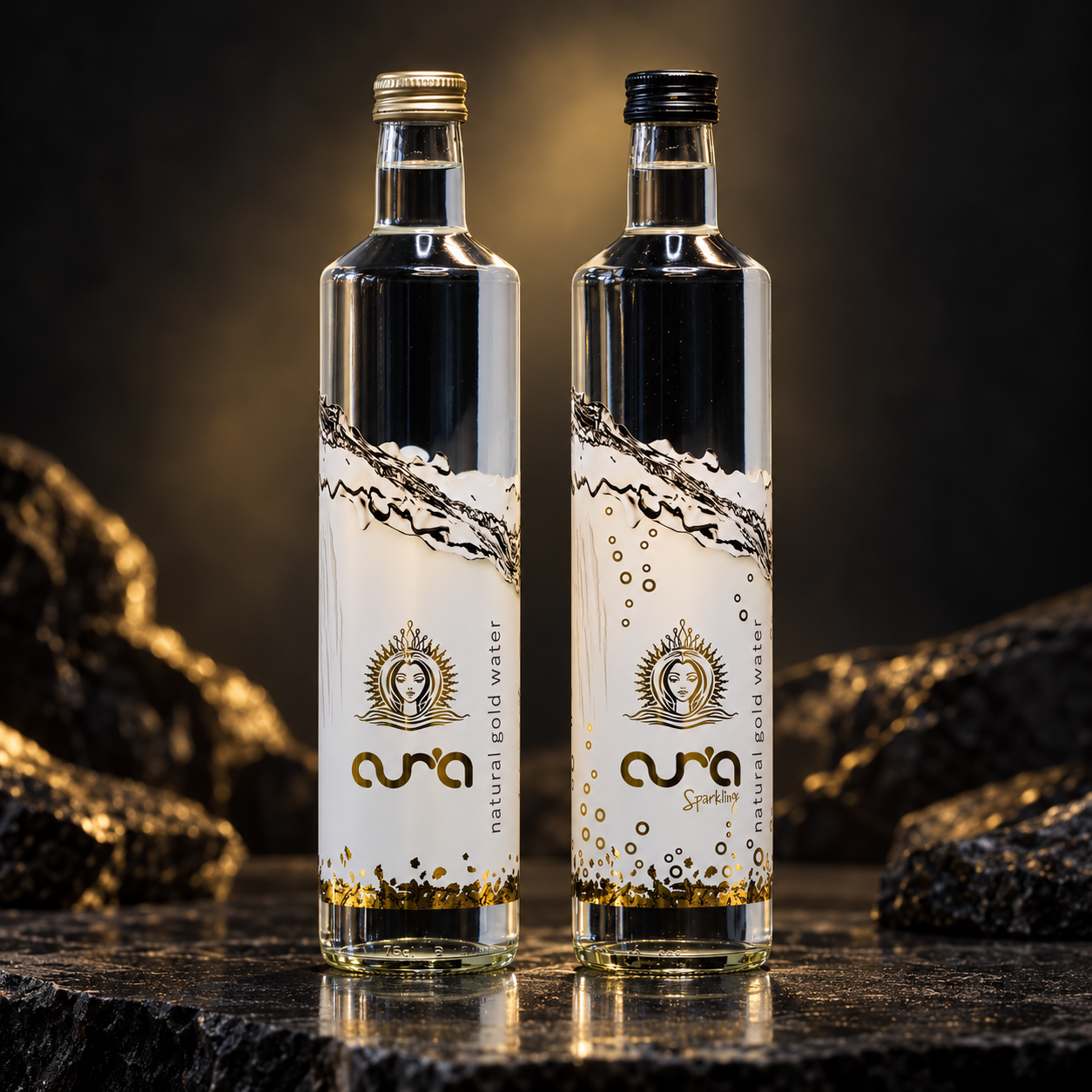
AUR'A Gold Water makes that easy. Our still and sparkling mineral waters are naturally alkaline at pH 8.25, bottled at the source in glass, and recognized with a Diamond Taste Award from the International Taste Institute, Brussels.
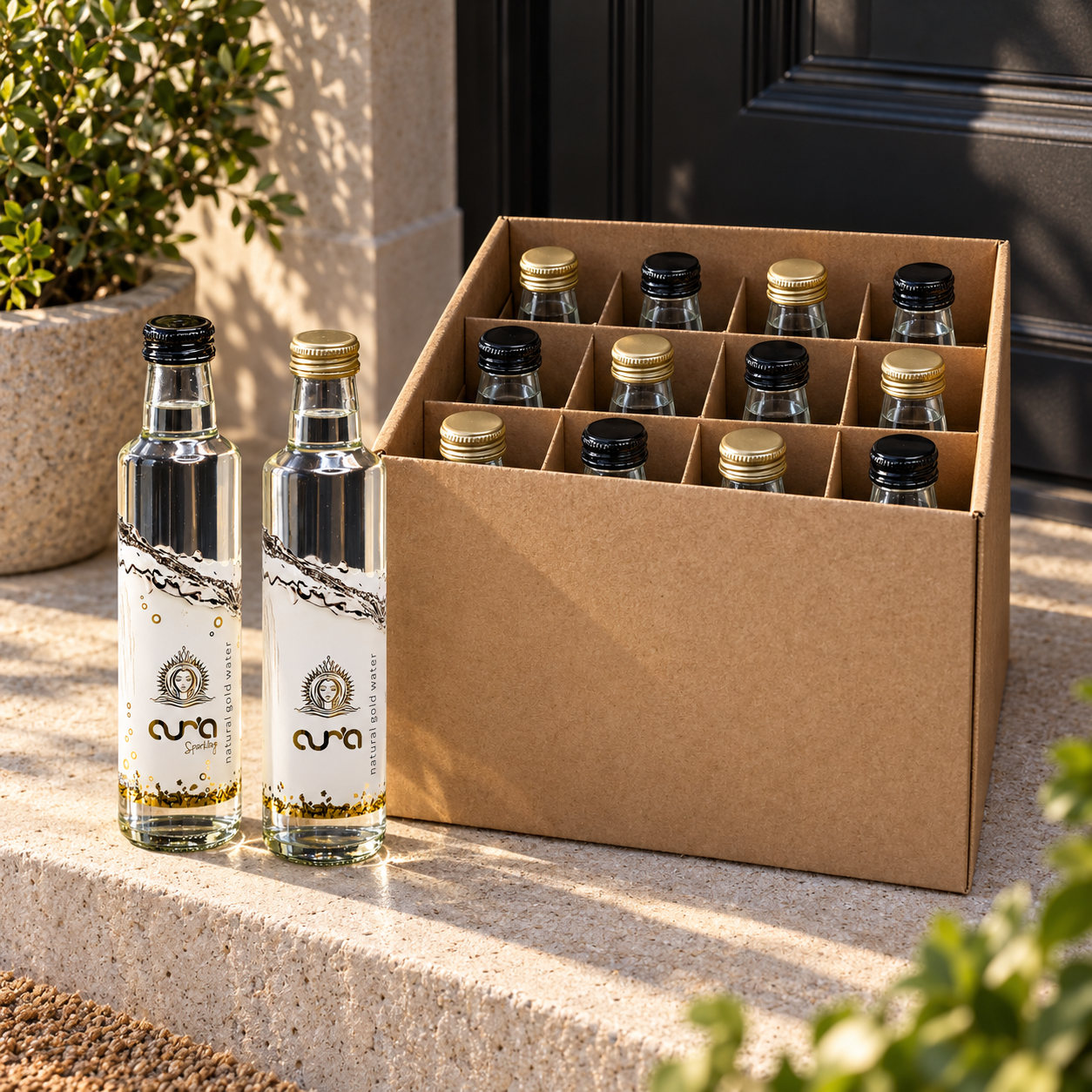
Two sizes are available. The 330 ml case of 12 at $95.00 is a single-serve option for a desk, a commute, or a guest at the table. The 750 ml case of 6 at $89.00 is made to be poured and shared at dinner. If you are deciding between them, our guide on choosing 330 ml or 750 ml bottled water breaks down which size fits which occasion.

Once you have settled on a daily amount, a subscription keeps it simple. The Monthly Daily delivers twelve 330 ml bottles for $80 a month, and the Monthly Table delivers six 750 ml bottles for $75 a month. You can set up a monthly delivery and never think about reordering again.
Setting a daily alkaline water amount is not complicated once you stop looking for an official number that does not exist.
Frequently Asked Questions
How much alkaline water is safe to drink per day?
No official daily limit exists for alkaline water, so the practical answer is to keep it within your total fluid needs and drink it in moderation. For most healthy adults, total fluids land around 9 cups (2.2 liters) for women and 13 cups (3 liters) for men. Many people treat one to three glasses of alkaline water a day as a comfortable starting point and build from there. If you have kidney disease or take daily medication, ask your doctor before making it a habit.
What is the best time to drink alkaline water?
The best time to drink alkaline water is whenever it helps you stay hydrated, but a few moments work well for most people. A glass in the morning rehydrates you after sleep, one before a meal supports fluid intake, and one after exercise replaces what you lost. Some people avoid drinking large amounts right before bed to limit nighttime bathroom trips. If you take medication, check with your pharmacist about timing, since water intake can affect how some drugs are absorbed.
Is alkaline water good for kidneys?
For healthy kidneys, alkaline water is generally fine in normal amounts, and your kidneys and lungs regulate blood pH regardless of what you drink. The question matters more for people with kidney disease: impaired kidneys may struggle to clear excess bicarbonate, so a high-alkaline habit is not something to start without medical advice. If you have chronic kidney disease, take diuretics, or follow a sodium-restricted diet, talk to your nephrologist before adding alkaline water to your routine.
Can you drink too much alkaline water?
Yes, in the sense that you can drink too much water of any kind. Overhydration dilutes sodium in the blood, a condition called hyponatremia, and it can happen with plain water as easily as with alkaline water. Very high-alkalinity water in large volumes may also cause digestive upset such as bloating or nausea in some people. Spread your intake across the day, stop when you feel full, and treat alkaline water as part of your total fluids rather than an extra on top of them.