How to Decide If Alkaline Water Health Benefits Are Real
Last Updated: October 28, 2026
Quick Summary
Alkaline water has real but limited health benefits: the evidence is moderate for hydration during exercise and weak to moderate for bone health, both driven by dissolved minerals like calcium and magnesium rather than pH. Claims that it prevents disease or changes your body's acid-base balance are unsupported. Judge alkaline water by its documented mineral profile, not its pH number.
- Regular tap water sits near pH 7, while alkaline water usually measures between 7.5 and 9.
- Naturally alkaline water carries calcium, magnesium, and bicarbonate; ionized water often does not.
- Stomach acid neutralizes alkalinity within minutes, so disease-prevention claims are unsupported.
- Start with one or two glasses a day and increase gradually to avoid stomach upset.
- Check the mineral analysis, named source, and third-party testing before buying.
Table of Contents
- What Alkaline Water Is and How It Differs From Regular Water
- Alkaline Water vs Regular Water: What Changes and What Doesn't
- Grading the Health Claims: What the Evidence Actually Supports
- Alkaline Water and Acid Reflux: What Relief Claims Get Right and Wrong
- Alkaline Water Side Effects and Who Should Be Cautious
- Can You Drink Alkaline Water Every Day? Dose, Safety, and Long-Term Use
- How to Evaluate Alkaline Water Claims, Labels, and Home Testing
- Choosing a Naturally Alkaline Mineral Water for Your Table
- Frequently Asked Questions
What Alkaline Water Is and How It Differs From Regular Water
Alkaline water is drinking water with a pH above 7, and the question of whether it has real health benefits comes down to chemistry, evidence, and a fair amount of marketing noise.
Regular tap water typically sits near neutral on the pH scale, around 7. Alkaline water measures higher, usually between 7.5 and 9, because of dissolved minerals such as calcium, magnesium, and bicarbonate.

The pH Scale and What an Alkaline pH Actually Means
The pH scale is a measure of how acidic or basic a liquid is, running from 0 to 14, with 7 as neutral (the EPA). Each whole number represents a tenfold change in acidity, so the gap between pH 7 and pH 8 is larger than it looks (usgs.gov). An alkaline pH simply means fewer free hydrogen ions. It says nothing on its own about mineral content, source quality, or health effects.
How Alkaline Water Is Made or Occurs Naturally
Water becomes alkaline in two broad ways. It can be naturally alkaline, meaning it passes through mineral-rich rock and picks up calcium, magnesium, and bicarbonate along the way. Or it can be ionized water, produced by an electric water ionizer that splits tap water into alkaline and acidic streams. Natural alkalinity comes with a mineral profile; ionized water often does not. That distinction drives most of the confusion in this category.
Alkaline Water vs Regular Water: What Changes and What Doesn't
The meaningful difference in alkaline water vs regular water is mineral composition, not pH alone. A naturally alkaline water delivers calcium, magnesium, and bicarbonate with every glass. A standard bottled or tap water may deliver far less.
Here is what most guides miss: a high pH number on a label is easy to manufacture and easy to market. A documented mineral profile is harder to fake and far more useful to you. Judge the water by what is dissolved in it, not by the number printed largest on the bottle.
| Feature | Naturally Alkaline Water | Regular Tap or Bottled Water |
|---|---|---|
| Typical pH | 7.5 to 9 | Around 7 |
| Mineral content | Calcium, magnesium, bicarbonate | Varies widely |
| Source | Mineral spring or aquifer | Municipal supply or spring |
| Main selling point | Mineral signature | Convenience |
Grading the Health Claims: What the Evidence Actually Supports
| Claim | Evidence tier | What the evidence actually shows |
|---|---|---|
| Hydration during exercise | Moderate | Mineral-containing water contributes electrolytes; palatability supports intake. The pH itself is not the mechanism. |
| Exercise recovery and sweat loss | Weak to moderate | Small human studies suggest mineral water can contribute to rehydration; results are mixed and often confounded by mineral content. |
| Acid reflux and heartburn symptom relief | Weak | Anecdotal reports and small studies; transient buffering is plausible but not a treatment. |
| Bone health and bone density | Weak to moderate | Calcium and magnesium intake matter for bone; alkaline water as a delivery vehicle is reasonable, but pH-driven bone claims are not supported. |
| Body acid-base balance | Unsupported | Lungs and kidneys hold blood pH within a narrow range regardless of diet or drink. |
| Cancer and chronic disease prevention | Unsupported | No credible human evidence; stomach acid neutralizes alkalinity within minutes. |
Hydration, Exercise Recovery, and Sweat Loss
Hydration claims hold up best when the water contains electrolytes. Sweat loss depletes sodium, potassium, and magnesium, and mineral-rich water contributes to replacing them. Many athletes find alkaline water pleasant to drink during and after training, which supports hydration status indirectly. The pH itself is not the mechanism; the minerals and the palatability are. This is a moderate tier claim: reasonable, but not a performance enhancer.
Bone Health, Bone Density, and Bone Loss
Bone health claims rest on calcium and magnesium intake, and this is where naturally alkaline mineral water earns its place at the table. A water that supplies meaningful calcium contributes to daily intake the same way food does. The claim that alkaline water reverses bone loss is unsupported. The claim that mineral water can be part of a bone-supporting diet is weak to moderate and depends entirely on the mineral profile, not the pH number.
Disease Prevention, Cancer, and Chronic Disease Claims
This is where the marketing outruns the science. No credible body holds that drinking alkaline water prevents cancer, stroke, or chronic disease. Stomach acid is far more acidic than any bottled water and neutralizes alkalinity within minutes. Treat any product promising disease prevention through pH as a red flag, full stop. This claim is unsupported and should be treated as a label to avoid rather than a feature to pay for.
How to Read an Evidence Claim Like an Editor
When you see a health claim on a bottle or a product page, ask three questions. First, is this a human study or a lab finding? Second, is the outcome the same as the claim? Third, who paid for it? Industry-funded research is not automatically wrong.
Alkaline Water and Acid Reflux: What Relief Claims Get Right and Wrong
Alkaline water and acid reflux is the claim with the most anecdotal support and the thinnest clinical backing. Some people report short-term symptom relief, and the logic is not absurd: a mildly alkaline liquid can transiently buffer stomach acid. But heartburn has many causes, and a glass of water is not a treatment plan. If reflux is frequent, see a clinician rather than shopping for water.
Alkaline Water Side Effects and Who Should Be Cautious
Alkaline water side effects are usually mild, but they are real, and the cautions that matter most are medical rather than cosmetic. Most guides stop at "you might feel bloated." The more useful guidance is who should talk to a clinician first, which medications interact with stomach acidity, and what is actually known versus unknown about drinking high-alkalinity water for years.
Common, Mild Side Effects
Some people notice stomach upset, bloating, or loose stools when they switch abruptly, particularly with ionized water that has an unusual mineral profile. A common pattern is that symptoms fade within a week or two as the gut adjusts, but there is no reason to push through discomfort. Start with one or two glasses a day and increase gradually if you want to make it a habit.
Medical Conditions That Warrant a Conversation First
- Medicines that depend on stomach acidity for absorption. Some drugs are formulated to release in an acidic environment. If you take one, ask your pharmacist whether a high-alkalinity drink could affect absorption.
What Is Known and Unknown About Long-Term, High-Volume Use
Long-term safety comes down to source quality and mineral content, not the pH figure. What is reasonably well established: drinking mineral water daily is common in many parts of the world and is generally well tolerated. What is genuinely unknown: the effects of sustained, high-volume intake of heavily ionized water with an unclear mineral profile, and whether years of very high alkalinity intake shifts anything meaningful in people with borderline kidney function. The honest position is that the long-term data are thin, which is a reason to favor naturally mineralized water with a documented composition over a device output you cannot verify.
Water Quality and Source Transparency
Water quality and source transparency matter as much as pH. A named source with third-party testing tells you what you are actually drinking. An unnamed ionizer output tells you almost nothing. If you cannot find a mineral analysis, treat the product as unverified.
For readers weighing similar questions about other water types, our honest answer on whether bubbly water is bad for you covers the carbonation side of the conversation.
Can You Drink Alkaline Water Every Day? Dose, Safety, and Long-Term Use
Daily drinkers who want a steady supply can set up a recurring delivery and adjust the schedule as consumption changes.
How to Evaluate Alkaline Water Claims, Labels, and Home Testing
Evaluating a bottle takes about two minutes if you know what to check. Most labels lead with pH and bury everything else. Flip that instinct around.
- Check the mineral analysis: calcium, magnesium, bicarbonate, sodium
- Confirm the source is named and specific
- Look for third-party testing or certification
- Ignore disease-prevention language entirely
- Test your own water with pH strips if you want a baseline
- Compare cost per liter against your actual consumption
Home pH strips are inexpensive and give a rough reading, though they will not tell you mineral content. For documented mineral composition data to verify what a label says, see our Mineral Composition Certificates.
Choosing a Naturally Alkaline Mineral Water for Your Table
For a dinner table, a hotel amenity, or a wedding, the choice should rest on provenance and mineral character rather than a pH claim. Natural alkalinity from a named source gives you a water with a stable, documented composition and a taste that holds up alongside food.
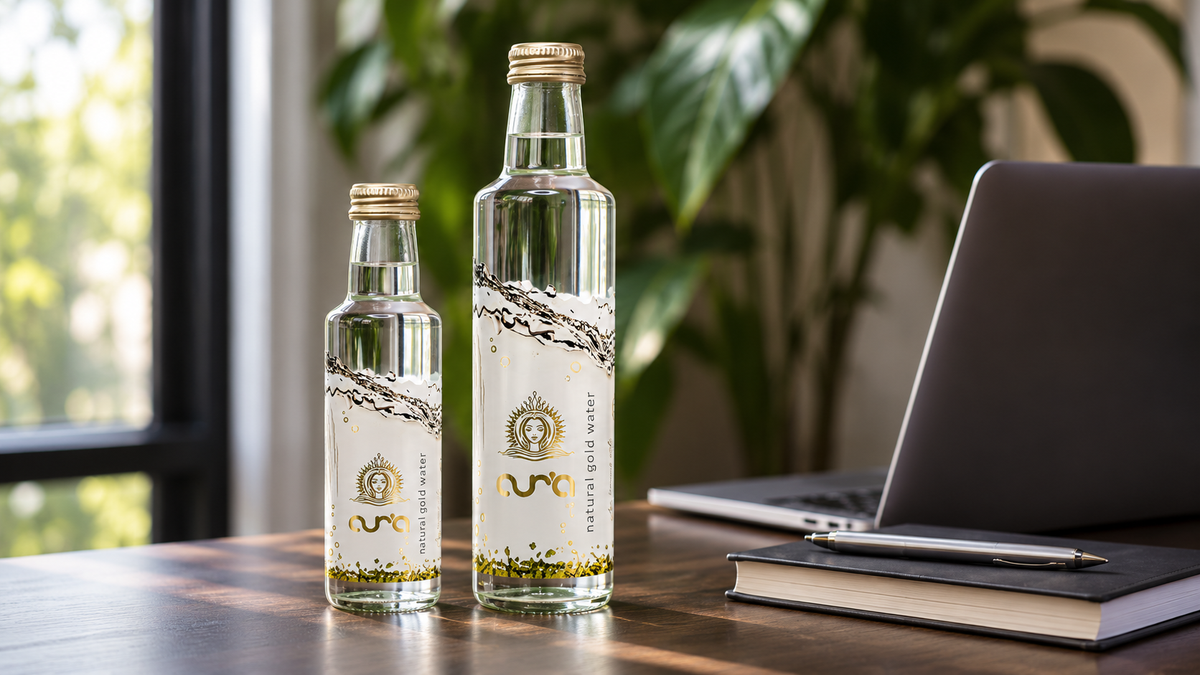
When you are ready, you can shop AUR’A Gold Water in still and sparkling varieties, with complimentary nationwide shipping.
Frequently Asked Questions
Is alkaline water actually better for you than regular water?
For most healthy adults, plain water already hydrates well, and the evidence for alkaline water's extra benefits is limited and mixed. Some small studies suggest modest advantages for hydration after exercise or for reflux symptoms, but results are inconsistent and often short-term. What matters more is total water intake, mineral content, and water quality. Treat alkaline water as a pleasant option rather than a proven health upgrade, and check with a doctor if you are managing a medical condition.
What are the downsides of alkaline water?
Alkaline water side effects are usually mild: some people report stomach upset, bloating, or loose stools when they start drinking it. Because it can lower stomach acid temporarily, it may affect digestion of protein or the absorption of certain medications. People with kidney disease or those taking acid-suppressing drugs should ask a doctor before making it a daily habit. Cost and packaging waste are practical downsides too, since bottled alkaline water often costs more than tap.
Can alkaline water help with acid reflux?
The research on alkaline water and acid reflux is early and small. A few studies suggest that water with a higher pH may neutralize pepsin, an enzyme tied to reflux irritation, but this has not been shown to treat GERD or replace standard care. Some people find it soothing; others notice no difference. If reflux is frequent or severe, talk to a clinician rather than relying on water pH, and avoid large volumes right before bed.
Can you drink alkaline water every day?
Most healthy adults can drink alkaline water every day without issue, and many people do. The key is moderation and variety: keep total fluid intake sensible, include plain water and mineral-rich foods, and watch for digestive changes. If you take prescription medication, especially acid reducers or drugs with narrow absorption windows, ask a pharmacist about timing. People with kidney conditions should get medical advice before making alkaline water a daily staple.
The hard part is not finding an alkaline water. It is finding one whose claims survive a close reading of the label. AUR’A Gold Water is bottled at the source in the Banat Mountains, ships complimentary nationwide, and offers flexible subscriptions you can pause, skip, or cancel anytime. Get started with AUR’A Gold Water and put a documented mineral signature on your table.