Article: What Is Mineral-Rich Water? A Practical Guide

What Is Mineral-Rich Water? A Practical Guide
Last Updated: November 15, 2026
Quick Summary
Mineral-rich water is water that naturally contains dissolved minerals such as calcium, magnesium, and bicarbonate, picked up as it moves through rock and soil. The term describes water with a meaningful mineral content, not water that has had minerals added later. On a label, 250 to 800 mg/L of total dissolved solids marks the clearly mineral-rich range.
- Read the mineral analysis panel on the back, not the marketing on the front.
- Water under 50 mg/L TDS is very low in minerals, soft and neutral.
- Two bottles with the same TDS can taste completely different because the mineral mix matters.
- Anyone watching salt intake should check the sodium line before buying.
- Remineralized water starts as purified water with a mineral blend added in a plant.
Table of Contents
- What Is Mineral-Rich Water, Exactly?
- What Minerals Are in Mineral Water?
- Mineral Water vs Regular Water: Tap, Purified, Spring and Sparkling
- Mineral-Rich Water Benefits and Risks
- How to Get Mineral-Rich Water: A Step-by-Step Selection Method
- Remineralized Water, Source Verification and Packaging Trade-Offs
- Choosing a Bottle for Your Table, Event or Guest List
- Frequently Asked Questions
What Is Mineral-Rich Water, Exactly?
Mineral-rich water is water that naturally contains dissolved minerals, such as calcium, magnesium, and bicarbonate, picked up as it moves through rock and soil. The term describes water with a meaningful mineral content, not water that has had minerals added later.
This guide explains how to read a mineral label, compare water types, and choose a bottle that fits your table. Below, we show you exactly how to tell mineral-rich water from ordinary bottled water, using the numbers on the label rather than the marketing on the front.
The key figure is total dissolved solids, or TDS. It measures how much mineral material is in the water. The higher the number, the more mineral character you taste.
How the Label Defines It: TDS and Parts Per Million
TDS is the sum of all dissolved minerals in a liter of water. It is usually listed in milligrams per liter, which is the same as parts per million.
Three ranges help you sort water quickly:
- Under 50 mg/L: very low mineral content, soft and neutral
- 50 to 250 mg/L: light mineral content, easy to drink daily
- 250 to 800 mg/L: clearly mineral-rich, with a fuller taste
A water at 430 mg/L sits comfortably in the mineral-rich range.
What Minerals Are in Mineral Water?
The minerals in mineral water depend entirely on the rock and soil the water passes through. Most natural mineral water contains some mix of calcium, magnesium, sodium, bicarbonate, sulfate, and chloride, with trace amounts of silica, potassium, and other elements. Because the source geology sets the recipe, two bottles labeled "mineral water" can differ by a factor of ten in any single mineral.
Each mineral changes both the taste and the health profile:
- Calcium: adds body and a slightly chalky finish; commonly the largest single mineral by weight in still mineral water, often in the 20-150 mg/L range
- Magnesium: brings a faint bitterness that many people enjoy; typical natural levels run from about 5 to 50 mg/L
- Sodium: affects saltiness and matters most for low-salt diets; most still mineral waters sit under 50 mg/L, but sparkling and high-TDS brands can exceed 200 mg/L
- Bicarbonate: gives a soft, rounded mouthfeel and buffers acidity; often the second-largest figure on the panel
- Sulfate: can add a dry edge at high levels; usually modest in still water but higher in some European sources
- Chloride: contributes a faint salinity; rarely the dominant mineral
- Silica: adds a subtle smoothness and is usually reported in single-digit to low double-digit mg/L
Reading a Mineral Analysis Label Step by Step
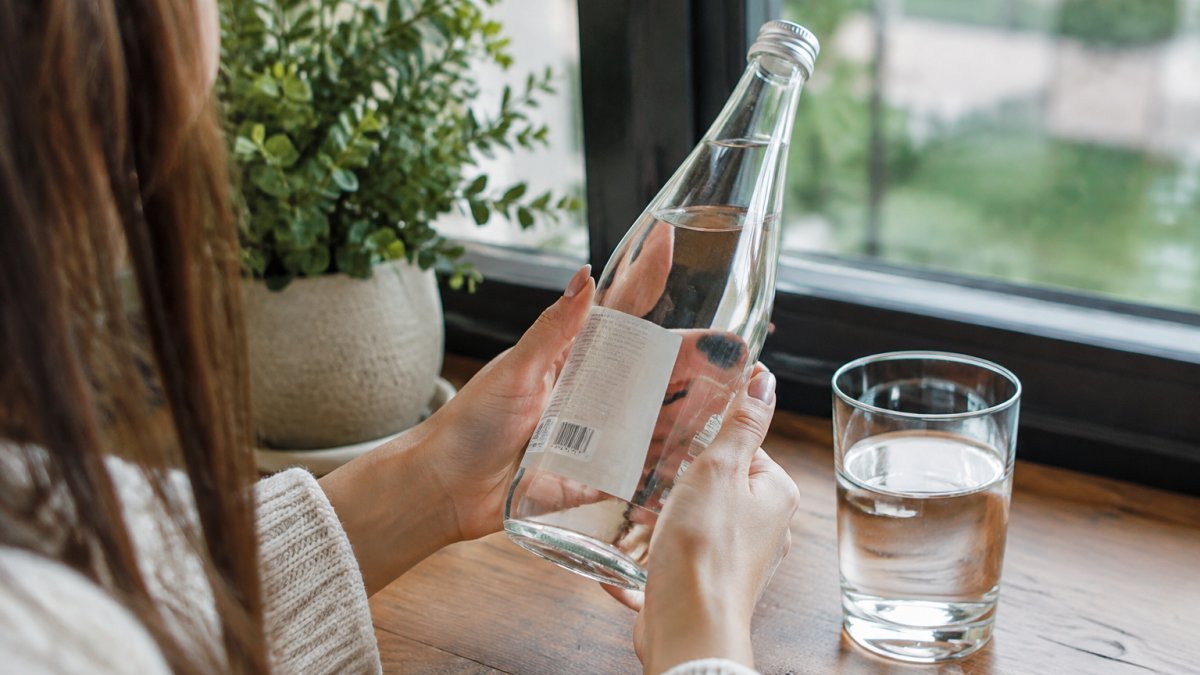
Most people read the front of the bottle and ignore the back. Flip it around. The mineral analysis panel is where the real story sits, and it is the single most useful tool for comparing brands without being swayed by marketing.
- Find the TDS figure first. This sets the overall mineral level. It is usually printed as "total dissolved solids" in mg/L, which is the same as parts per million.
- Check calcium and magnesium next. These are the two most common minerals and the ones most tied to taste and dietary contribution.
- Look at sodium. Anything above roughly 200 mg/L is worth noting, especially if you are watching salt.
- Scan bicarbonate, sulfate, and chloride to understand the mouthfeel and finish.
- Note the source. A named spring or aquifer tells you where the water began and signals that the composition should be stable batch to batch.
- Compare units carefully. Some imported labels report in mg/L, others in ppm; the numbers are equivalent, but a label that switches units mid-panel is a red flag for sloppy labeling.
What most guides miss is that two bottles with the same TDS can taste completely different. The mix matters as much as the total. A 400 mg/L water dominated by bicarbonate tastes soft and round, while a 400 mg/L water dominated by sulfate and magnesium tastes sharper and more mineral-forward. That is why the panel, not the front label, is the honest comparison.
Watch out: a high calcium number does not mean the calcium is fully absorbed; labeling reflects content, not bioavailability, so treat the panel as a composition guide rather than a nutrient promise.
Mineral Water vs Regular Water: Tap, Purified, Spring and Sparkling
Mineral water differs from other water mainly in where its minerals come from. Natural mineral water gains them underground and keeps them unchanged. Tap, purified, spring, and sparkling water each follow different rules.
| Water Type | Mineral Source | Typical TDS | Notes |
|---|---|---|---|
| Natural mineral water | Underground rock, unchanged | 250-800 mg/L | Consistent composition |
| Tap water | Varies by supply | Varies widely | Treated for safety |
| Purified water | Removed, then sometimes added back | Very low | Often near zero minerals |
| Spring water | Underground source | Low to moderate | Must come from a spring |
| Sparkling water | Natural or added carbonation | Varies | Carbonation affects taste |
Purified water has had minerals stripped out. Remineralized water has some added back, but the result is a manufactured blend, not a natural one. If you are weighing sparkling against still, it helps to know whether bubbly water is bad for you before you commit to a case.
Mineral-Rich Water Benefits and Risks
Mineral-rich water contributes some calcium and magnesium to daily intake, and its taste may encourage people to drink more water.
Water with calcium and magnesium can add to daily mineral intake, and calcium and magnesium play roles in bone health. Water is a supplement to food, not a replacement for it.
Mineral water also has some practical considerations:
- Sodium: water with higher sodium content can add to daily salt intake if you drink a large volume
- High TDS: some people find very mineral-heavy water hard to drink
- Cost: mineral water typically costs more than tap water
Who Should Check the Sodium Line First
Anyone watching salt intake should read the sodium figure before buying. A water low in sodium can still be rich in calcium and magnesium, so you do not lose the mineral benefit.
A practical way to choose by need:
For a deeper look at everyday choices, this guide on how to choose the best still water for daily hydration walks through the trade-offs.
How to Get Mineral-Rich Water: A Step-by-Step Selection Method
Getting mineral-rich water starts with matching the label to your needs. Use this method to narrow the shelf fast.
- Set your TDS floor. Decide the minimum mineral level you want, usually 250 mg/L or higher.
- Check the sodium line. Rule out anything above your limit.
- Confirm the source. Look for a named spring or aquifer, not just a country.
- Match the format to the moment. A small bottle for the desk, a large one for the table.
- Compare price per bottle. Divide the case price by the bottle count.
- Read the packaging. Glass protects taste better than plastic for long storage.
On format, choosing between 330 ml and 750 ml bottled water depends on whether you are drinking alone or pouring for guests.
Remineralized Water, Source Verification and Packaging Trade-Offs
Remineralized water is not the same as natural mineral water. Remineralized water starts as purified water, then has a mineral blend added in a plant. Natural mineral water gains its minerals over decades underground and keeps that composition stable.
Source verification matters here. A trustworthy label names the spring and states that the water is bottled at the source. Third-party lab analysis, such as ICP-MS testing, confirms what is actually in the bottle.
Packaging carries its own trade-offs. Glass is heavier to ship and costs more, but it protects taste and suits a table setting. Plastic is lighter and cheaper but can affect flavor over time. Neither choice is free, and the right answer depends on how you plan to serve the water.
Choosing a Bottle for Your Table, Event or Guest List
For a dinner table or an event, the bottle becomes part of the presentation. A 750 ml glass bottle pours for a table of guests, while a 330 ml bottle gives each person their own. Hosts planning a celebration can review how to choose a bottled water gift box for special occasions for gifting guidance.

At AUR’A Gold Water, we bottle at the source in Romania's Banat Mountains, in glass, with trace gold and silver detected by ICP-MS laboratory analysis. The water carries a Diamond Taste Award from the International Taste Institute, Brussels. For table service, AUR’A Monthly, The Table delivers six 750 ml bottles each month with free shipping.
Choosing water for a table, a hotel, or a wedding means balancing mineral content, source trust, and presentation. AUR’A Gold Water meets all three: bottled at the source, held in glass, and available in still and sparkling with complimentary nationwide shipping. Subscriptions let you pause, skip, or cancel anytime, so supply follows your calendar. Get started with AUR’A Gold Water and give every guest a bottle worth remembering.
Frequently Asked Questions
What is the most mineral-rich water?
There is no single winner, because mineral content is measured as total dissolved solids (TDS) in milligrams per liter, and bottles vary widely. High-TDS waters tend to carry more calcium, magnesium and bicarbonate and a stronger taste. Check the analysis panel on the back label rather than the front, since marketing terms like "natural" say nothing about TDS. A still water around 430 mg/L TDS sits in the mineral-rich range.
Is mineral-rich water good for you?
Mineral-rich water contributes calcium, magnesium and bicarbonate to daily intake, and it supports hydration. If you are watching salt intake, compare the sodium line across bottles before you commit. Water is a supplement to a balanced diet, not a replacement for one.
Who should not drink mineral water?
People on sodium-restricted diets should read labels carefully, because some mineral waters carry meaningful sodium. Anyone with a doctor-managed fluid or electrolyte plan should ask their physician before making mineral water a daily habit.
How can you tell how much mineral content water has?
Look for total dissolved solids on the label, usually shown in mg/L or parts per million. Then scan the individual figures for calcium, magnesium, sodium, bicarbonate, sulfate and silica. A bottle listing roughly 430 mg/L TDS with a clear mineral breakdown tells you far more than a front-label claim. If a brand publishes third-party lab analysis, such as ICP-MS testing, that is a stronger signal than a taste award alone.