How to Choose the Best Still Water for Daily Hydration
Quick Summary
The best still water for daily hydration is one whose label gives measurable facts: a named source, total dissolved solids in mg/L, a pH value, and published lab testing. AUR'A Gold Water still water, bottled at its source in Romania's Banat Mountains, lists a pH of 8.25 and TDS of approximately 430 mg/L. Compare cost per liter across formats before you buy.
- Check the label for a named source, mineral figures in mg/L, and a pH value.
- AUR'A Gold Water still water has a pH of 8.25 and TDS of approximately 430 mg/L.
- Convert all mineral figures to mg/L before comparing two bottles side by side.
- A 750 ml case of 6 at $89.00 costs about $19.78 per liter, versus about $23.99 for the 330 ml case of 12.
- Ask for lab reports and published test results rather than relying on claims like pure or natural.
Table of Contents
- How to Choose the Best Still Water for Daily Hydration
- What Makes a Still Water Right for Everyday Drinking
- Healthiest Bottled Water: How to Read the Label
- Spring Water vs. Mineral Water: Which Suits Daily Use
- Bottled Water Mineral Content and Electrolytes Compared
- Safest Bottled Water: Testing, Sourcing and Contaminant Transparency
- Cost Per Liter and Value for Regular Consumption
- Booking Your Still Water Supply: Choosing AUR'A Gold Water for Daily Hydration
- Frequently Asked Questions
How to Choose the Best Still Water for Daily Hydration
Last Updated: November 7, 2026
Choosing the best still water for daily hydration comes down to a few measurable things: source, mineral content, pH, testing transparency, and cost per liter. This guide from AUR'A Gold Water walks through each one so you can compare bottles on facts rather than labels. Most people pick water by design alone, but the numbers on the back of the bottle tell you far more about how it will taste and what you are drinking.
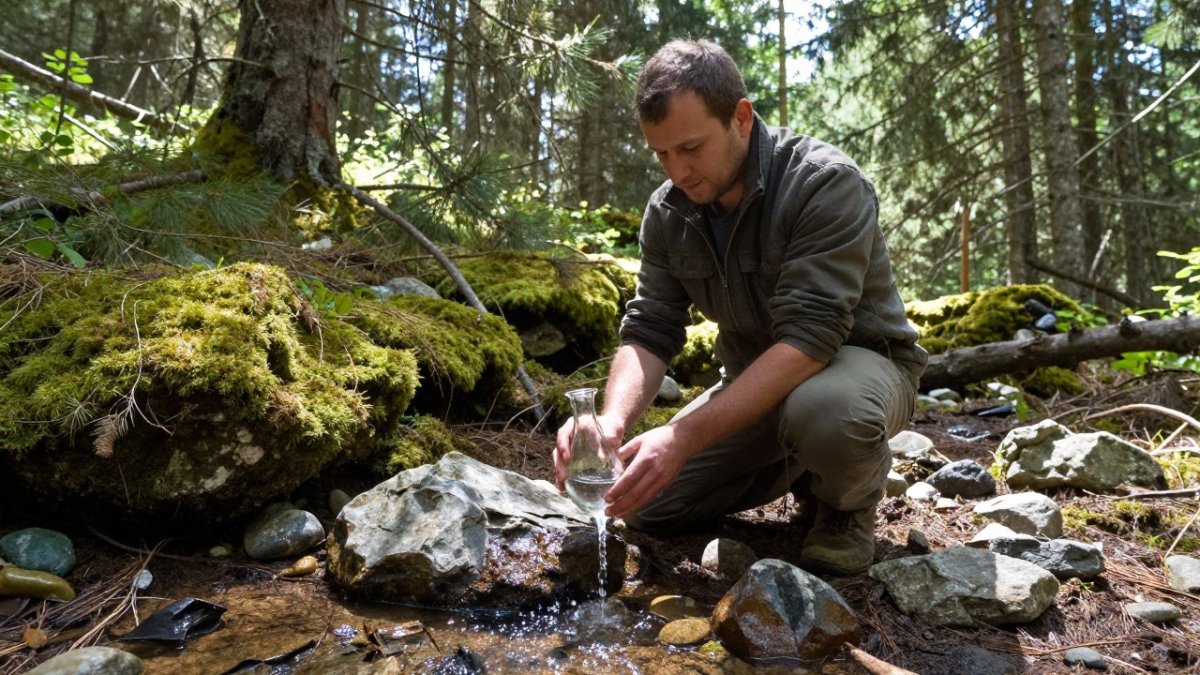
AUR'A Gold Water still water is bottled at its natural source in Romania's Banat Mountains. U.S. Food and Drug Administration bottled water regulations set the federal baseline for bottled water sold in the United States, but that baseline does not tell you how a water tastes or what it is for. That gap is where a careful buyer can do better.
What Makes a Still Water Right for Everyday Drinking
A still water suits daily drinking when it is clean, consistent, and mineral-balanced enough to taste fresh every time you pour it. Sparkling and flavored waters have their place, but still water is the simplest choice for steady hydration.
Look for three things: a named source, a stated mineral profile, and a pH value. AUR'A Gold Water measures a pH of 8.25, with total dissolved solids of approximately 430 mg/L for the still variety.
Our 330 ml single-serve glass bottles fit the desk, car, or meeting room. The AUR'A 330 ml case of 12 is one of the available formats for daily use.

Healthiest Bottled Water: How to Read the Label
The healthiest bottled water is the one whose label gives you real information. Start with the source, then check the mineral figures, then look for a lab-backed quality statement.
Read the label in this order:
- Source: A named spring or region tells you where the water came from.
- Total dissolved solids (TDS): This measures the total mineral content in mg/L.
- pH: This shows whether the water is neutral, slightly alkaline, or acidic.
- Treatment: "Purified" and "spring" describe very different processes.
Be cautious with vague claims like "pure" or "natural" with no supporting data. A label that lists measurable values is easier to trust than one that relies on marketing language.
Spring Water vs. Mineral Water: Which Suits Daily Use
Spring water and mineral water both come from underground sources, but they differ in how consistently they are defined and how much mineral content they carry. For daily use, the better choice depends on taste preference and the mineral profile you want.
Spring water is typically moderate in minerals and light in flavor. Mineral water is defined by a higher, stable level of dissolved minerals and often has a more pronounced taste. Many people drinking several liters a day prefer the lighter option, while those who want more mineral character tend to choose mineral water.
U.S. Food and Drug Administration bottled water standards define how each category may be labeled, so check that the label matches what the bottle contains.
Bottled Water Mineral Content and Electrolytes Compared
Mineral content matters because it shapes both taste and what you take in with each glass. Calcium, magnesium, potassium, and sodium are the electrolytes most often listed on labels, and total dissolved solids (TDS) is the summary number that captures them all. Most top-ranking guides stop at naming these minerals; a more useful approach is to compare them on a consistent basis.
To compare bottles fairly, normalize every figure to the same unit. Labels usually report minerals in mg/L (equivalent to parts per million). TDS is also reported in mg/L. When you line up two bottles, put their calcium, magnesium, sodium, and TDS numbers side by side in mg/L, then note the serving size, because a 330 ml bottle and a 750 ml bottle deliver different total amounts even when the concentration is identical.
A practical comparison framework:
- TDS (mg/L): The summary of all dissolved minerals.
- Calcium and magnesium (mg/L): These contribute body and a rounded mouthfeel. Waters with more of both often taste smoother to people who dislike flat purified water.
- Sodium (mg/L): Usually low in still bottled water, but worth checking if you are watching sodium intake. The U.S. Food and Drug Administration nutrition labeling guidance explains how sodium is declared on labels.
- Potassium (mg/L): Often present in small amounts; contributes little to taste at typical bottled-water levels.
- pH: Not a mineral, but it interacts with the mineral profile. A slightly alkaline pH (above 7) is common in mineral-rich spring waters.
Our Banat Mountain water has a TDS of approximately 430 mg/L, which places it in the moderate-to-fuller range. That figure is the number to check against any other label: request the mineral analysis, convert everything to mg/L, and compare like for like. Trace gold and silver are present in measurable amounts, detected by ICP-MS laboratory analysis.
Higher mineral content does not automatically mean a better water. It means a fuller taste, which some drinkers enjoy and others find heavy. For daily hydration, the practical question is whether the mineral profile suits your palate and whether the label discloses it clearly enough for you to compare. A water that publishes its full mineral panel in mg/L is easier to evaluate than one that lists only a source and a slogan.
Watch out: comparing TDS from one brand to another without confirming both figures are in mg/L (some imported labels use different conventions) can make a lighter water look heavier than it is.
Safest Bottled Water: Testing, Sourcing and Contaminant Transparency
The safest bottled water is one with a documented source, a clear treatment method, and published test results. Ask for the lab reports, not just the claim.
Federal rules in the United States set limits for contaminants in bottled water, and U.S. Environmental Protection Agency drinking water standards publish the drinking water limits that many bottlers reference. A brand that openly shares its testing is giving you something concrete to check.
Our mineral composition and certificates page lists the mineral analysis, trace gold and silver results, laboratory reports, and our Kosher Parve certificate, so you can verify the claims yourself.
Cost Per Liter and Value for Regular Consumption
Cost per liter is the most useful way to compare bottled water prices, because bottle size and case count vary so widely that sticker prices mislead. The method is simple: divide the package price by the total liters in the package. Do this for every format you are considering, then compare the results on the same line.
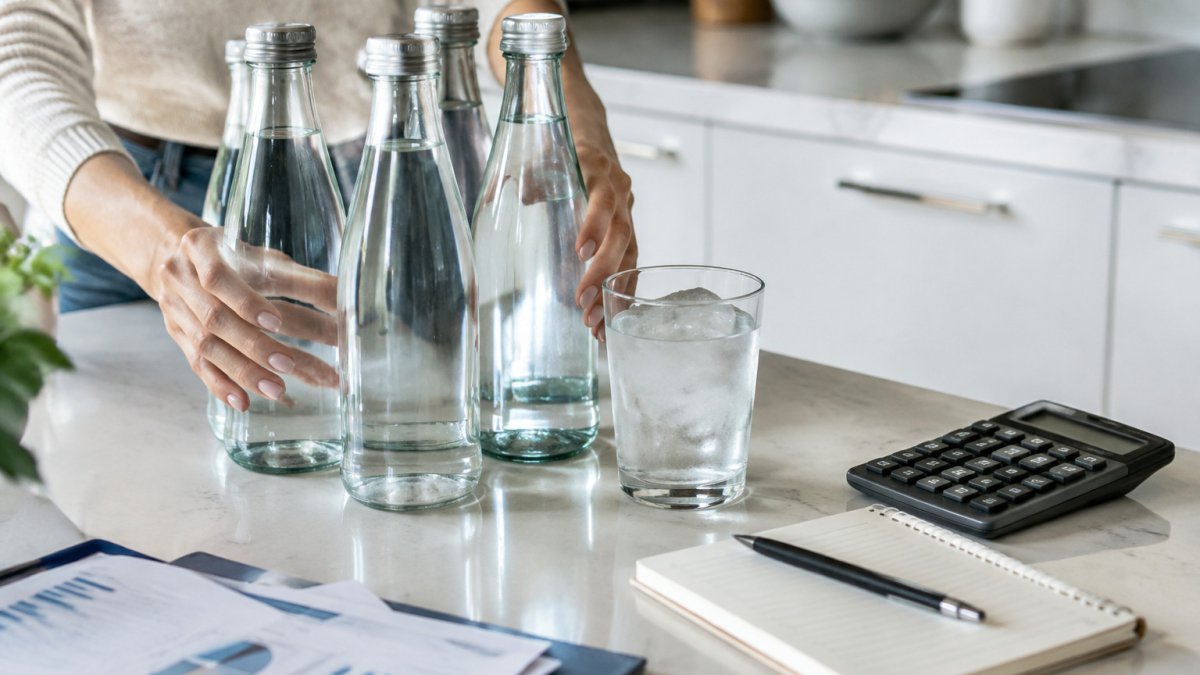
Here is the math for the formats, using the listed prices:
- 330 ml case of 12: $95.00 for 12 bottles. Total volume is 12 × 0.33 L = 3.96 L, so the cost is about $23.99 per liter, or about $7.92 per bottle.
- 750 ml case of 6: $89.00 for 6 bottles. Total volume is 6 × 0.75 L = 4.5 L, so the cost is about $19.78 per liter, or about $14.83 per bottle.
- Monthly 330 ml subscription (15% off): $80 per month with shipping included. At the same 3.96 L per case, that works out to about $20.20 per liter.
- Monthly 750 ml subscription (15% off): $75 per month with shipping included. At 4.5 L per case, that works out to about $16.67 per liter.
The pattern is consistent: larger bottles and subscription pricing lower the per-liter cost. The 750 ml format holds more than twice the volume of the 330 ml bottle, so even though the case price looks similar, the per-liter math favors the larger format for anyone pouring at home. The subscription discount then reduces the per-liter cost again, and shipping is included with each delivery.
Value is not only price per liter. Weigh three factors together:
- Format fit: A 330 ml bottle suits a desk, car, or meeting room; a 750 ml bottle suits a household or office that pours into glasses. Buying the wrong format for your routine raises cost per use even when the per-liter price is low.
- Packaging: The U.S. Environmental Protection Agency recycling guidance explains how glass recycling works in most curbside programs.
- Delivery cadence: A subscription that matches your actual consumption avoids both stockouts and overstock. Ordering more than you drink lowers the effective value no matter what the per-liter figure says.
Watch out: comparing a subscription price to a one-time case price without confirming whether shipping is included can make the subscription look cheaper or more expensive than it actually is; always compare delivered cost per liter.
The table below compares the package formats by cost per liter, using the prices and volumes stated in the article.
| Format | Price | Cost per liter |
|---|---|---|
| 330 ml case of 12 | $95.00 | about $23.99 |
| 750 ml case of 6 | $89.00 | about $19.78 |
| 330 ml monthly subscription | $80 per month | about $20.20 |
| 750 ml monthly subscription | $75 per month | about $16.67 |
Cost per liter
Booking Your Still Water Supply: Choosing AUR'A Gold Water for Daily Hydration
AUR'A Gold Water is bottled in glass at the source in Romania's Banat Mountains with a pH of 8.25 and a Diamond Taste Award from the International Taste Institute, Brussels.
A monthly 750 ml subscription and a one-time 750 ml case are both available.

Get started with AUR'A Gold Water and set up a delivery schedule that fits your daily routine.
BUTTON: Shop Still Water CARD_TITLE: Ready to pick your daily still water? CARD_TEXT: AUR'A Gold Water is bottled at its Romanian source in glass, with published mineral data.
Frequently Asked Questions
What is the best water to drink for daily hydration?
For most people, the best daily water is one with a moderate, clean taste and a mineral profile they find easy to drink in quantity. Still water with a balanced mineral content tends to suit regular intake, while very high sodium or extreme pH values are rarely necessary. Check the label for total dissolved solids, pH and source, then compare the cost per liter for the volume you drink each week. The water is best served lightly chilled.
Does mineral content matter when choosing still water?
Mineral content matters because it shapes taste and contributes small amounts of minerals such as calcium, magnesium and potassium. AUR'A Gold Water lists total dissolved solids of approximately 430 mg/L for its still water and a pH of 8.25, and it reports trace gold and silver detected by ICP-MS laboratory analysis. Compare the published figures across brands and choose the profile you enjoy drinking every day.
Is spring water or mineral water better for daily drinking?
Neither type is inherently better for everyday use. Spring water comes from an underground source and is often lower in dissolved minerals, while mineral water is defined by a naturally occurring mineral content that remains stable at the source. The better choice depends on taste preference and how much mineral character you want in each glass. AUR'A Gold Water is a natural mineral water bottled at its source in the Banat Mountains of Romania, available as a 750 ml case of six or a 330 ml case of twelve, as a one-time purchase or monthly subscription.
How do I know a still water is safe to drink every day?
Look for transparent sourcing information, the bottling location and any third-party laboratory results the brand publishes. AUR'A Gold Water discloses its pH of 8.25, its total dissolved solids and its trace mineral analysis, and it is certified Kosher Parve. Ask providers for current testing documentation before you commit to a regular supply,