Article: 7 Mineral Water Brands Worth the Splurge
7 Mineral Water Brands Worth the Splurge
Last Updated: October 25, 2026
Quick Summary
The best mineral water brands are judged on four things: where the water is bottled, what minerals it carries, what it is bottled in, and what it costs per liter. Compare mineral water brands using the back-label mineral panel, source and bottling location, packaging material, and price per liter.
- Mineral water naturally contains dissolved minerals in a consistent composition from a protected underground source.
- TDS under roughly 100 mg/L reads crisp, while 200-500 mg/L reads rounder and more mineral.
- Glass is inert and does not interact with the water; plastic can leave a flavor trace in warm storage.
- A six-pack of 750 ml bottles holds 4.5 liters; divide pack price by 4.5 for cost per liter.
- The 330 ml case of 12 costs $95.00 and suits daily desk and meeting room supply.
Table of Contents
- What Separates One Mineral Water Brand From Another
- Mineral Water vs Spring Water: Reading the Label Correctly
- Still Mineral Water Brands and the Case for a Daily Bottle
- Sparkling Mineral Water Brands: Carbonation, Bubble Size, and Food Pairing
- Mineral Water Benefits: What the Composition Actually Delivers
- How to Compare Mineral Content, Packaging, and Price Per Liter
- Building Your AUR'A Order for Home, Table, or Gifting
- Frequently Asked Questions
What Separates One Mineral Water Brand From Another
Mineral water brands differ on four things that matter: where the water is bottled, what minerals it carries, what it is bottled in, and what it costs per liter. Everything else, including label design, is marketing. At AUR'A Gold Water, we sell water from a single source in Romania's Banat Mountains, so we have a bias, but also a framework that works on any bottle.
First, check the bottling location. Water bottled where it is drawn keeps a verifiable link to its source.
Second, total dissolved solids (TDS), printed in milligrams per liter.
Third, packaging. Glass is inert and does not interact with the water; plastic is lighter and cheaper to ship but can affect taste over time, especially in warm storage.
If you are comparing a shortlist of options, our ranked guide to top water bottle brands puts the leading names side by side on exactly these criteria.
Mineral Water vs Spring Water: Reading the Label Correctly
The label on a bottle of water is regulated, but the rules are looser than most shoppers assume. In the United States, the FDA standards for bottled water set identity rules for spring water, mineral water, and purified water.
Here is how to read one in about thirty seconds:
- Source line: a named spring, well, or aquifer, ideally with a town or region attached
- Treatment statement: "no treatment" or "filtered" tells you how processed the water is
- Mineral panel: calcium, magnesium, sodium, bicarbonate, and TDS, usually in mg/L
A common mistake is assuming "spring" means "mineral", it does not; spring water can be very low in minerals. Another is reading "purified" as premium: purified water is typically municipal water that has been filtered or distilled, a different product category entirely.
Still Mineral Water Brands and the Case for a Daily Bottle
Still water is the workhorse of a premium lineup: it pairs with food without competing, suits a desk or cup holder, and is the format most people actually finish. The case for a daily still bottle comes down to habit, a water you enjoy is one you drink more of.
Still versus sparkling: a use-case framework
Most roundups lean toward sparkling, leaving still-water shoppers underserved. The two formats serve different jobs:
- Still: daily hydration, desk and meeting-room supply, pairing with delicate food, and any setting where carbonation would compete with the meal.
- Sparkling: palate cleansing, fried or rich dishes, and occasions where the bubbles are part of the experience.
A balanced lineup usually includes both, but the still bottle is the one that gets finished. If you are choosing a single format for a household, still is the lower-risk default.
What to look for in a still mineral water
Still waters vary more than their clear appearance suggests. Use the same panel as for sparkling:
- TDS in the 200-500 mg/L range reads round and mineral without feeling heavy at the table.
- Calcium and magnesium are the minerals most often cited for dietary contribution; check the mg/L values rather than the front-label claim.
- Sodium matters if you watch salt; still waters are often lower than sparkling, but not always.
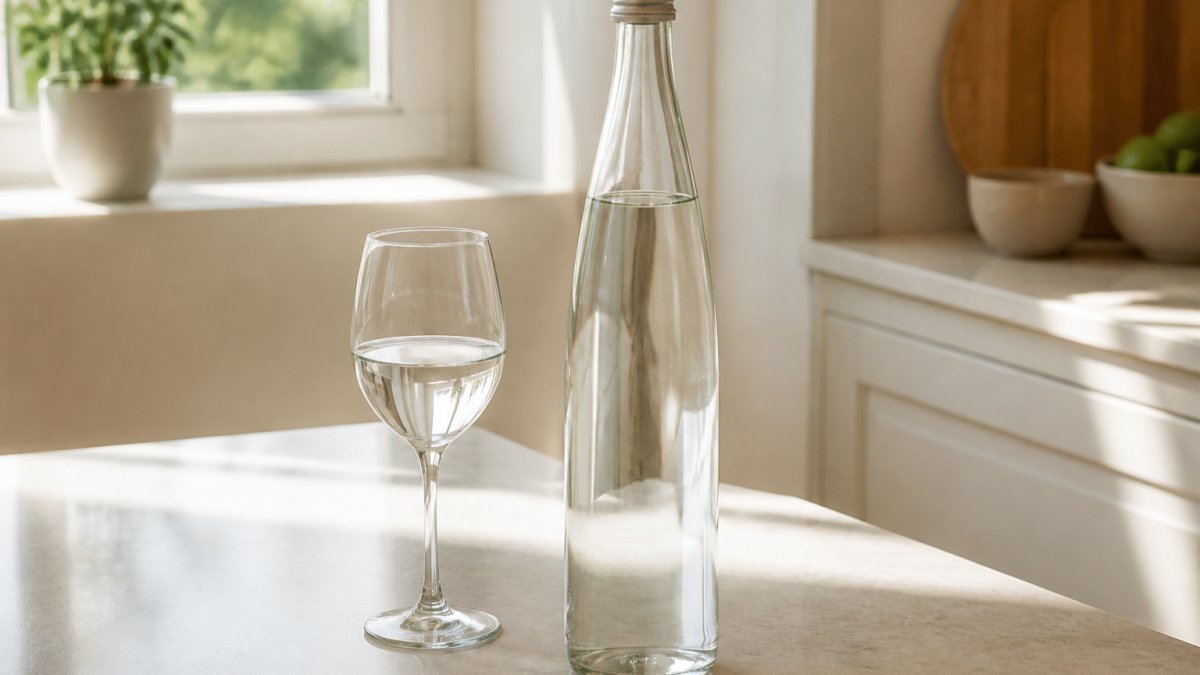
Our own still water is bottled at the source in glass, with a naturally alkaline pH of about 8.25 and total dissolved solids around 430 mg/L.
For a first order, a case of twelve 330 ml bottles is the simplest way to test whether a still water fits your daily routine before committing to a larger format.

Who should choose still over sparkling
Still water is the better default for drinking with meals, keeping at a desk, or serving children and guests. Sparkling suits palate cleansing and rich dishes. Most households want a still daily bottle plus a smaller sparkling supply for hosting, the split our formats are designed to support.
Sparkling Mineral Water Brands: Carbonation, Bubble Size, and Food Pairing
Sparkling water is judged on its bubbles. Fine, persistent carbonation reads elegant and suits delicate food; aggressive carbonation reads refreshing and suits fried or rich dishes.
Bubble size comes from the carbonation method and the base water's mineral content: more dissolved solids hold finer bubbles, while very soft water produces larger, sharper bubbles that dissipate faster once poured.
Pairing follows the same logic as wine:
- Fine bubbles, low sodium: oysters, sushi, light salads
- Medium bubbles, balanced minerals: roast chicken, pasta, soft cheeses
- Vigorous bubbles, higher minerality: fried food, cured meats, rich desserts
If you are weighing whether bubbly is a healthy daily habit or an occasional treat, this piece on whether bubbly water is bad for you answers it properly rather than repeating the usual myths.
Mineral Water Benefits: What the Composition Actually Delivers
What the composition does deliver is consistency: a stable mineral panel gives you the same contribution every time, which most foods cannot claim.
The CDC guidance on water and hydration is blunt about the main point: plain water is the preferred drink for hydration, and the minerals are a bonus rather than the reason to drink it.
What most guides miss is that pH is the least useful number on the label for health purposes. The body regulates its own pH tightly.
How to Compare Mineral Content, Packaging, and Price Per Liter
Most roundups compare water by taste alone, which leaves the shopper unable to answer what drives a repeat purchase: what am I getting per liter, and at what cost? A proper comparison uses four columns, mineral composition, packaging, price per liter, and source verification, and takes about five minutes per brand.
Build a standardized mineral panel
The back label is where the real comparison lives. Look for these values in milligrams per liter (mg/L):
- Total dissolved solids (TDS): the single best proxy for how heavy or light the water will taste. Under roughly 100 mg/L reads crisp and clean; 200-500 mg/L reads rounder; above 500 mg/L reads distinctly mineral.
- Calcium: typically the largest contributor to mouthfeel and to any dietary calcium contribution.
- Magnesium: contributes a slightly bitter, structured finish at higher levels.
A consistent comparison table looks like this in practice:
| What to record | Where to find it | Why it matters |
|---|---|---|
| TDS (mg/L) | Back label mineral panel | Predicts taste weight |
| Calcium, magnesium, sodium, bicarbonate (mg/L) | Back label mineral panel | Compares dietary contribution and mouthfeel |
| Source and bottling location | Source line and bottling statement | Verifies the water was bottled where it was drawn |
| Packaging material | Bottle and cap | Affects taste fidelity, weight, and recyclability |
| Price per liter | Pack price ÷ total liters | Exposes how much of the premium is the bottle |
If a brand does not publish a mineral panel, that is itself a data point. A water marketed on its source but silent on composition is asking you to trust the label design rather than the numbers.
Verify the source and bottling origin
A named spring, well, or aquifer is the starting point, but the stronger signal is "bottled at the source" paired with a town or region, not a country alone. Water drawn in one place and shipped elsewhere for bottling loses the verifiable link between source and bottle, so cross-check the published source and bottling facility against the label.
Do the price-per-liter math
Price per liter sorts the premium tier fast. A six-pack of 750 ml bottles holds 4.5 liters; divide the pack price by 4.5 for the real per-liter cost. Do the same for a case of twelve 330 ml bottles (3.96 liters) and any subscription, and include shipping in the total.
Weigh the packaging trade-offs
- Glass: inert, does not interact with the water, and widely recyclable; heavier to ship and to store.
- Aluminum: chills quickly and blocks light; lighter than glass but with its own recycling stream.
- Plastic: lightest and least expensive to ship; the material most likely to leave a flavor trace in warm storage.
These are trade-offs, not scandals. The right choice depends on how you store and serve the water, and whether taste fidelity or shipping weight matters more.
For a broader view of how the category is priced and positioned, the IBWA bottled water industry data tracks market trends across packaging formats.
Building Your AUR'A Order for Home, Table, or Gifting
Ordering well means matching bottle size to occasion. The 330 ml is a single-serving format for a desk, meeting room, or guest.
| Format | What You Get | Price | Best For |
|---|---|---|---|
| 330 ml case of 12 | Twelve glass bottles, still or sparkling | $95.00 | Daily desk and meeting room supply |
| 750 ml case of 6 | Six glass bottles, still or sparkling | $89.00 | Dinner table and entertaining |
| Monthly Daily subscription | Twelve 330 ml bottles, delivered monthly | $80.00/month | A standing daily supply |
| Monthly Table subscription | Six 750 ml bottles, delivered monthly | $75.00/month | Regular hosting and family meals |
| AUR'A Gift Box | One still and one sparkling, 750 ml each | $69.00 | Gifting and thank-yous |
If you want a set-and-forget supply, the monthly Daily subscription saves 15% against one-time orders and ships free on every delivery, and you can pause, skip, or cancel anytime. For a gift, the AUR'A Gift Box arrives with a card carrying your personal message and ships complimentary nationwide.


Watch out: for a large event, order against your confirmed guest count rather than your invite list.
Choosing a mineral water brand is a decision about what you value: source transparency, mineral character, packaging, or price per liter.
Frequently Asked Questions
What are the different types of water, and how do mineral water brands fit in?
Bottled water falls into four main categories: mineral, spring, purified, and sparkling. Mineral water must come from a protected underground source and carry a consistent mineral composition at the point of bottling. Spring water also comes from an underground source but is not held to a fixed mineral profile. Purified water is treated municipal or other water, and sparkling water is any of these with carbonation added or retained. When you compare mineral water brands, you are comparing source geology, mineral content, and packaging, not just price.
What is the difference between mineral water and spring water?
The distinction sits in the source and the consistency. Mineral water is drawn from a protected aquifer and must show a stable mineral composition, so the calcium, magnesium, sodium, and bicarbonate levels stay roughly the same bottle to bottle. Spring water comes from an underground formation too, but producers do not have to guarantee a fixed mineral profile. That is why mineral water is often described by its total dissolved solids and pH, while spring water is usually sold on taste and origin alone.
Is sparkling mineral water as hydrating as still water?
Yes. Carbonation does not reduce hydration. The water still delivers fluid, and the minerals dissolved in it, including calcium and magnesium, are absorbed the same way. Some people find sparkling water easier to drink through the day because the carbonation and mouthfeel make it feel more like a treat than a chore. If you are choosing among sparkling mineral water brands, check the carbonation level and whether the bubbles are natural or added, since that changes the taste more than the hydration.
How can you tell whether bottled water is mineral water?
Read the label for the source name, the mineral composition, and the total dissolved solids figure. A genuine mineral water names the spring or source, lists calcium, magnesium, sodium, and bicarbonate values, and often states pH. The phrase bottled at the source is another marker, meaning the water was not transported before bottling. If the label only says purified or drinking water, it is not mineral water, regardless of how the bottle looks.
What should you look for when choosing a mineral water brand?
Start with the source: a named aquifer and bottling at origin are the strongest signals of provenance. Then compare mineral composition and total dissolved solids, since a higher figure usually means more mouthfeel and a lower one means a lighter, crisper taste. Check packaging, because glass protects flavor better than plastic over time. Finally, work out price per liter and whether shipping is included, as that often decides whether a premium mineral water brands purchase makes sense for weekly use or only for occasions.